
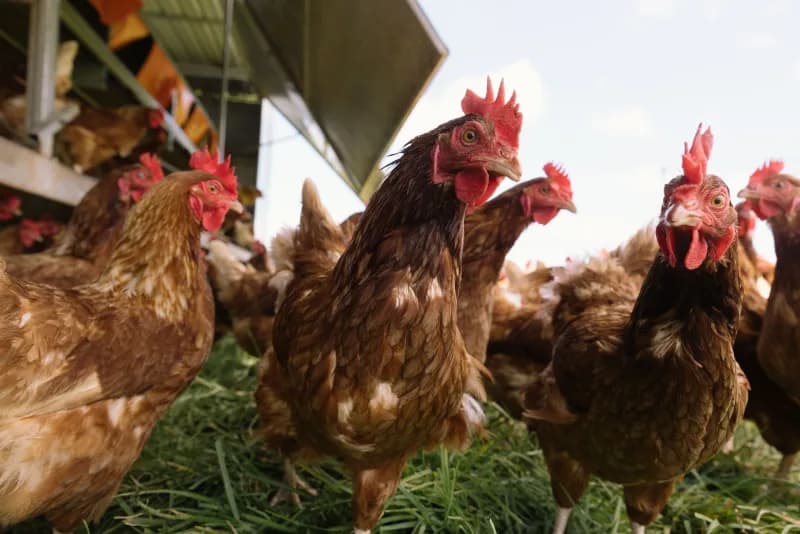
What rotational grazing does (and why it matters)
Rotational grazing means moving your animals across the pasture in sections, so each piece of ground gets a proper rest before they come back. Most people start because they've heard it's better for the land. They're right, and the reason it works is worth understanding, because it changes how you run everything else.
What happens when birds stay put
Continuous grazing (where animals have free access to the same ground indefinitely) looks simple. Less moving, less management. But the land tells a different story, and it's the same story whether you're running birds, sheep or cattle.
Graze the same patch day after day and a few things happen in sequence. The pasture gets eaten down faster than it can recover. The soil surface compacts under constant foot traffic. Manure piles up in the same spots, shifting from a benefit to a burden. And because parasites and pathogens cycle through the droppings and back into the same ground, disease pressure builds steadily — for every animal that grazes there.
You end up feeding more, because there's less pasture. You medicate more, because the stock are under greater disease pressure. And the land slowly degrades.
What rotation changes
Move stock onto fresh ground every few days, and the whole system shifts.
Animals land on new pasture, graze it down, drop a hit of nitrogen and manure, then they're gone before the cycle can establish. The paddock they've left gets a rest, usually two to four weeks, depending on your stock density and the season. In that time the pasture regrows, the soil biology recovers and any remaining pathogens or parasite larvae die off without a host. The grazing itself pushes the grass to send down deeper roots — and those roots are what pull carbon out of the air and hold it in the soil.
It works even harder when you run animals together. Chickens following sheep or cattle scratch the manure apart for grubs and fly larvae, spreading the fertiliser evenly and breaking the parasite cycles that would otherwise come back on the bigger stock. The results compound. Earthworm numbers climb, because earthworms thrive in genuinely rested, biologically active soil. Pasture comes back denser and more diverse, which means better feed for whatever grazes it next. Feed costs drop, because every animal has quality green matter in front of it. And because nothing stays on the same ground long enough for parasite cycles to complete, disease pressure stays manageable across the whole system.
The mobile infrastructure piece
None of this works if the gear is too hard to move — that's the practical reality of regenerative grazing. And when the infrastructure doesn't move, the rotation doesn't happen.
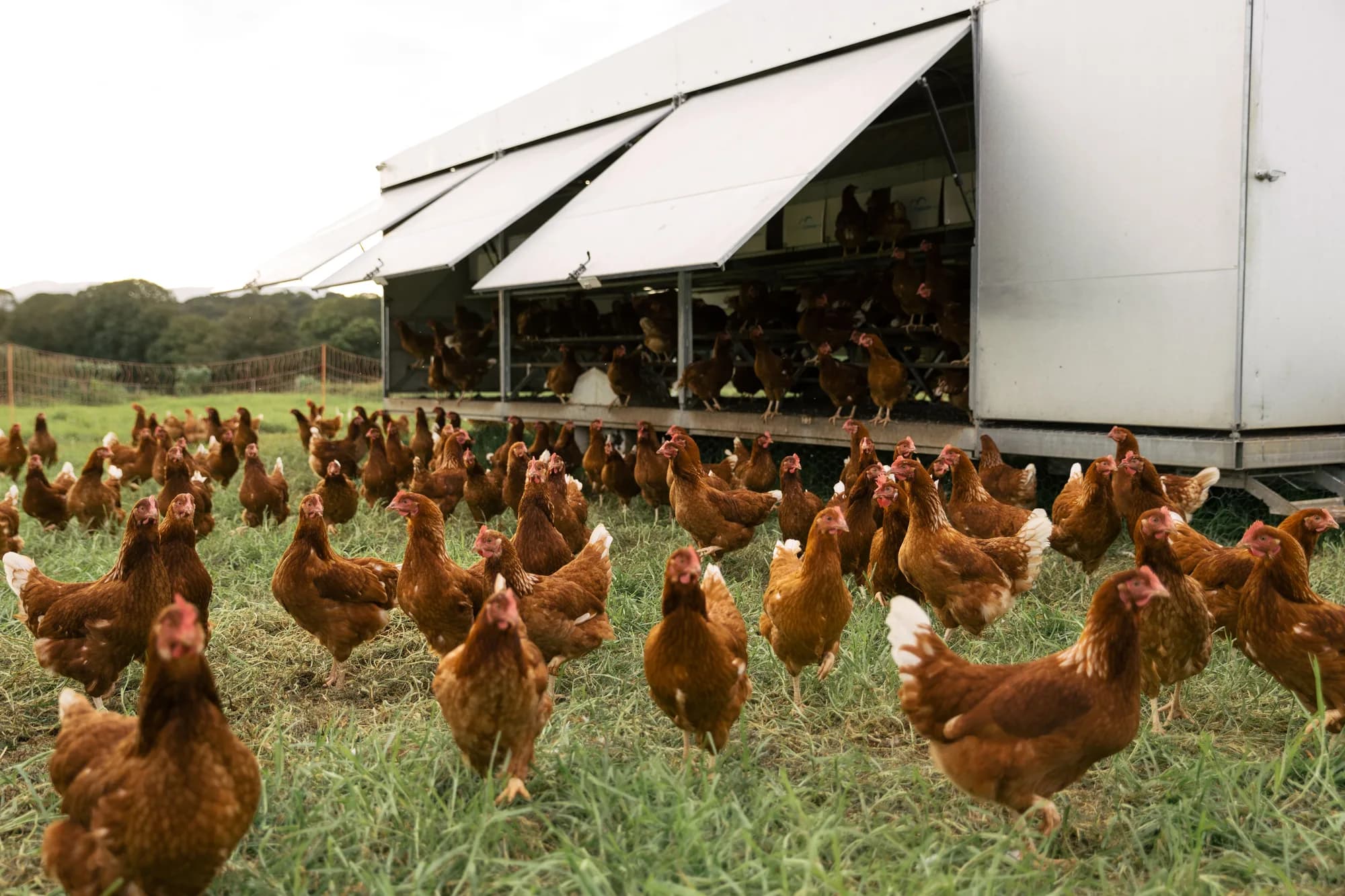
This is what Tinkera gear is all about. Mobile coops with a proper chassis, solar power and automatic doors, so daily management doesn't depend on the system sitting still. Mineral feeder trailers that move with a standard vehicle. Water systems on wheels.
The principle is simple. If it's easy to move, you'll move it. And if you move it, the land benefits.
Starting out
You don't need a complex system to get the basics right. A paddock divided into sections, a mobile shelter and a schedule that gives each section genuine rest is enough to see a difference in a season.
If you're working out what a rotational system looks like for your property, read our guide on how to work out the right rotation schedule.
Or get in touch directly at hello@tinkera.com.au.
Common questions
How often should you move chickens on pasture?
For layer hens, every 3 to 7 days suits most rotational setups. Meat birds are usually moved daily. The pasture is the real guide — if the ground's going bare before moving day, move earlier.
How long does pasture need to rest between rotations?
In warm months with reasonable rainfall, 25 to 30 days is typical. In dry or cold periods, it can stretch to 60 days.
Does rotational grazing cut feed costs and improve product quality?
Yes on both, when it's running properly. Animals on fresh, quality pasture forage more and lean less on supplementary feed, and you spend less on animal health too, because parasite and disease pressure drops. It works harder again when you run birds behind sheep or cattle — the chooks clean up the grubs and larvae the bigger stock leave behind, and the grazing itself drives deeper grass roots that pull carbon into the soil and bring the paddock back better each cycle.
And what the animals eat shows up in what they produce. Hens on real pasture lay eggs with up to three times the omega-3 of caged birds, along with more vitamin A and vitamin E. Better ground, better feed, better eggs.
Tinkera builds mobile farming infrastructure for rotational grazing systems. Everything we make is Australian galvanised steel, built locally in Northern NSW and designed for the way farms actually work.
More from Farming knowledge
Ready to build your rotational system?
Explore Tinkera’s range of mobile farming equipment.